
Similar Posts
Pickleball is rapidly gaining popularity across the United States. In 2022 alone, participation skyrocketed by 85.7%. And over the past three years, it’s seen an unbelievable 158.6% jump.
Whether you’re here for the competition, the community, or just the thrill of a new challenge, you’re about to join millions who can’t get enough of this sport. But before you step onto the court, you will need the right pickleball equipment for beginners to make the most of your experience.
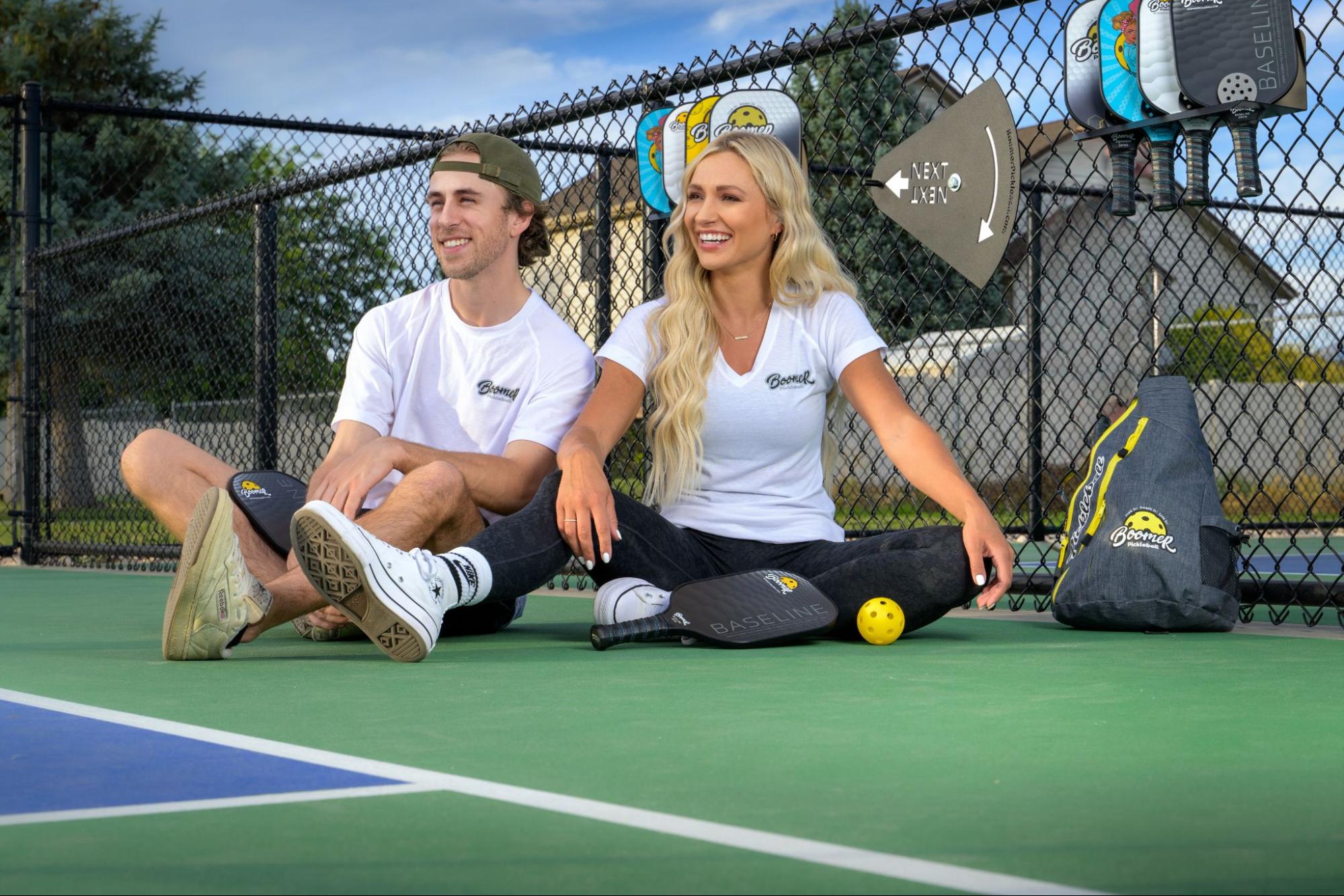
5 Essential Pickleball Equipment for Your Starter Kit
Feeling a bit lost on where to start? Don’t worry, we’ve got you covered. Here at Boomer Pickleball, we’ve guided countless newbies in putting together the perfect gear to kick off their pickleball journey.
With our experience in the game, we’re excited to share the top five pieces of pickleball equipment every beginner needs in their kit.
1. Pickleball Paddle
Let’s start with the most important piece of pickleball training equipment: your pickleball paddle. Think of it as an extension of your arm; it must feel right in your hand.
As a beginner, you don’t need to spend a fortune on a high-end paddle, but you do need one that suits your style and comfort.
Here’s what to look for.
Material Choices
Paddles come in different materials like wood, composite, and graphite. If you’re just starting and looking for something budget-friendly, wooden paddles are a solid choice, though they can be a bit heavy. Composite paddles are a great middle-ground—they’re lighter than wood and offer a good balance of control and power.
Once you’re ready to invest a bit more in pickleball training equipment, go for graphite paddles. While they’re incredibly lightweight and provide excellent control, they do have a higher price tag.
Grip Size
A paddle that’s too big or too small can throw off your game. As a rule of thumb, you should opt for a smaller grip if you have small hands. Likewise, larger hands will feel more comfortable with a bigger grip.
Weight
The weight of your paddle will also impact how you play.
Lighter paddles, usually around 7 ounces (about 198.45 g), are easier to swing and better for quick reactions. However, they might not give you as much power behind your shots.
Heavier paddles, over 8 ounces (about 226.8 g), pack a punch in terms of power, but they can tire you out faster.
For beginners, a mid-weight paddle is a good place to start. Use it to experiment with different styles as you find your groove.
2. Pickleball Balls
Not all pickleball balls are the same. If you’re playing outside, you’ll want to use outdoor balls built to handle wind and other elements. Typically, they’re heavier and have smaller holes to prevent them from being tossed around.
On the other hand, indoor balls are lighter, have larger holes, and are designed for controlled environments.
Color and Visibility
Most pickleball balls come in colors like yellow, white, and orange. You need to choose a color that stands out against the court you’re playing on. The ball should be easy for your eyes to track, so you don’t lose sight of it in the middle of a rally.
- If you’re playing outside on a sunny day, a bright yellow ball is easier to spot.
- If you’re indoors on a darker court, go for a white or orange ball.
Durability
Outdoor balls are typically tougher and can handle more wear and tear. Indoor balls, while lighter and easier to control, tend to wear out quicker because they’re often played on rougher surfaces.
It’s a good idea to have a few extra balls on hand, especially if you’re a beginner and only getting a feel for the game.
3. Pickleball Nets
A pickleball net might look like a smaller version of a tennis net, but they’re different. The standard pickleball net is 22 feet wide, with a height of 36 inches at the sidelines and 34 inches at the center. These dimensions are specifically designed to accommodate the unique pace and style of the game.
When it comes to choosing a pickleball net, quality is everything. Look for a net that’s made from robust materials, with strong, weather-resistant posts that can withstand the elements if you’re playing outdoors. Remember, a well-maintained net contributes to a fair and smooth game.
4. Proper Footwear
Good shoes are a must-have for any sport, and pickleball is no different. You need footwear that provides comfort, support, and stability as you move quickly around the court.
Running shoes are not the best choice for pickleball because they’re designed for moving straight ahead, with lots of cushioning for forward motion. However, pickleball involves a lot of side-to-side movements, quick pivots, and stops.
Instead, look for court shoes that are made specifically for pickleball (or even tennis). They offer the lateral support you need to keep your ankles stable and prevent injuries.
You also want shoes that feel comfortable the moment you put them on. Try on several pairs, walk around in them, do a few mock side steps, and see how they feel. Your shoes should fit snugly to provide stability; but not so tight that they’re cutting off circulation or causing discomfort.
5. Pickleball Bag
You’ve got your paddle, balls, shoes, and net. Now, you need something to haul your beginner pickleball equipment all to the court.
A good pickleball bag can make your life so much easier by keeping everything organized and ready to go.
First off, think about what you need to carry. You want a bag that’s big enough to hold all your gear but not so huge that it’s a pain to lug around. Look for a bag with plenty of compartments—one for your shoes, another for your paddles, and maybe a separate pocket for your balls and small items like keys and snacks.
Next, consider the material. You want something tough enough to handle regular trips to the court and the occasional toss into the back of your car. Nylon or polyester bags are usually a good bet—they’re durable and can stand up to the elements. Plus, they’re easy to clean.
If you’re walking any distance to your local courts, you’ll appreciate a bag with padded, adjustable straps. Backpack-style bags are great because they distribute the weight evenly, so you’re not putting all the strain on one shoulder.
Bonus: Paddle Rack
While a paddle rack isn’t something you need right off the bat, it’s a great addition to consider as you get more into pickleball and start building up your pickleball equipment collection.
Once you have a couple of paddles, some extra balls, and maybe even a few pairs of shoes, a paddle rack can help keep everything organized and ready to go. Consider it the next step in your pickleball journey.
Conclusion
There you have it – the best pickleball equipment every beginner needs to start on the right foot. From the paddle in your hand to the shoes on your feet, each piece of gear plays a role in how you play the game and how much fun you’ll have.
Don’t stress too much about getting everything perfect. The most important thing is to get out there, start playing, and enjoy yourself. Get all your first-time pickleball equipment with Boomer Pickleball! We’re your one-stop shop for the best in pickleball paddles, balls, nets, bags, and more. Browse our website or reach out to us today!


