
Similar Posts
To say pickleball has taken the US by storm would be an understatement.
In 2024, 4,000 new pickleball courts were added to meet the growing demand from players, bringing the total to 15,910 courts nationwide.
But with the growing demand, property managers are under pressure to maintain their pickleball courts to handle the crowd and keep the game going for everyone. Whether your court is located in an apartment complex or a club, your members expect a well-organized, safe, and enjoyable space to play.
The challenge is to balance popularity with efficiency so everyone gets fair playtime without creating scheduling conflicts or overuse. Let’s learn about the basics of pickleball court management in this post.
1. Start with the Right Pickleball Court Layout
This may sound obvious, but choosing the right pickleball court layout is the heart of your management. As a property manager, you’ll need to consider the flow of play, seating for spectators, and safe spacing around each court.
This includes considering:
- Court Spacing: Maintain at least 10 feet behind the baseline and 5 feet on the sides. This prevents players from feeling cramped and reduces the risk of injury.
- Multi-Court Planning: If space allows, build side-by-side courts with a central walkway to get the most out of available space. It also boosts accessibility and makes it easier to install dividers.
- Flexibility: If you have limited space, use blended lines on existing tennis or basketball courts. This allows your residents to play pickleball without needing a full redesign.
A well-planned pickleball court layout makes scheduling more efficient and reduces disputes over space.
2. Use Pickleball Court Dividers for Smooth Play
Installing dividers is one of the simplest ways to optimize pickleball court usage. Dividers separate side-by-side courts, keeping balls from rolling into active games. This minimizes interruptions and improves safety.
The three popular pickleball court dividers are:
- Portable Net Dividers: They’re lightweight and easy to move, and perfect for courts that switch between pickleball and other sports.
- Curtain Systems: These are more common in larger complexes and indoor pickleball courts since they provide full separation between courts.
- Fence Dividers: Fence dividers are great, but they’re permanent installations, which means they’re suitable for outdoor courts with higher footfall.
Dividers not only prevent delays but also improve the overall playing experience for your members. It’s a must if you want to keep attracting more players to your court.
3. Invest in Proper Pickleball Court Lighting
Even the best pickleball court layout falls short without good visibility. Installing quality pickleball court lighting allows players to play even after dark, spreads out usage, and gives you more flexibility in scheduling.
But when choosing lighting, be sure to:
- Buy LED fixtures as they’re energy-efficient and last longer. According to the US Department of Energy, LEDs use at least 75% less energy and last up to 25 times longer than incandescent lighting.
- Make sure the lights cover your entire pickleball court without creating dark spots or glare. Lighting should improve player comfort, not hinder it.
- Use automated systems to control lighting hours and reduce unnecessary energy use. It’ll also help you lower your energy bills.
Good lighting also makes your players feel safer, which is especially important in shared community spaces.
4. Schedule Court Reservations with Digital Tools
Scheduling is arguably one of the toughest parts of pickleball court management. Without structure, players may crowd the courts, leading to frustration. A reservation system solves this problem by creating fair and preplanned access.
But when implementing this system, you should:
Use mobile-friendly booking apps so your residents can check availability and reserve time slots on the go.
Set time limits for a game to 60 or 90 minutes during peak hours to let everyone enjoy their time on the court.
Block maintenance periods and let players know when your pickleball court will be cleaned and inspected.
5. Plan for Both Outdoor and Indoor Pickleball Courts
Most communities benefit from having both outdoor and indoor pickleball courts. Outdoor courts provide fresh air and a casual environment when the weather is pleasant. On the other hand, indoor courts allow year-round play regardless of the weather.
If you have limited space, you can:
- Convert multipurpose gyms into indoor pickleball courts using portable nets.
- Blend indoor and outdoor scheduling so players spread out evenly across facilities.
- Use priority booking to direct traffic to underutilized courts during off-peak hours.
6. Create Clear Pickleball Court Rules
Rules create structure and reduce misunderstandings among players. You should post clear signage on court use, scheduling, and etiquette.
Here are a few rules that’ll help you get started:
- Time limits during busy hours
- Sign-up or check-in requirements
- Guidelines for rotating play after a set number of games
- Restrictions on food, drinks, and pets on the court
Clear rules make your pickleball court management smoother and prevent disputes from escalating into bigger issues.
7. Encourage Group Play and Rotations
Pickleball is a social game, and encouraging group formats like round robins or open play helps optimize pickleball court usage. Instead of four players holding a court for hours, group play allows more people to enjoy the facility.
Here’s how you can promote group play:
- Designate certain hours as “open play” for all skill levels.
- Post rotation guidelines, such as “winners stay on for one game, then rotate.”
- Encourage doubles over singles, since doubles involve more players per court.
This method reduces waiting times and builds community spirit within the property.
8. Train Your Staff on Pickleball Court Management
Even the best system fails without trained staff to support it. As a property manager, you should make sure maintenance crews and front-desk staff understand the basics of pickleball court management.
This may include:
- Checking court conditions daily for safety hazards
- Assisting with reservation system troubleshooting
- Enforcing posted rules
- Setting up dividers and nets when needed
With trained staff, your residents will see consistent and professional handling of their recreational spaces.
Keep Your Pickleball Court Thriving with Efficient Management
Keeping your pickleball court well-maintained and organized benefits everyone. But as a property manager, you must focus on fairness as much as efficiency, because you also want to strengthen community life. Pickleball is a great way to bring people together, and with the right pickleball court management, everyone gets a chance to play.
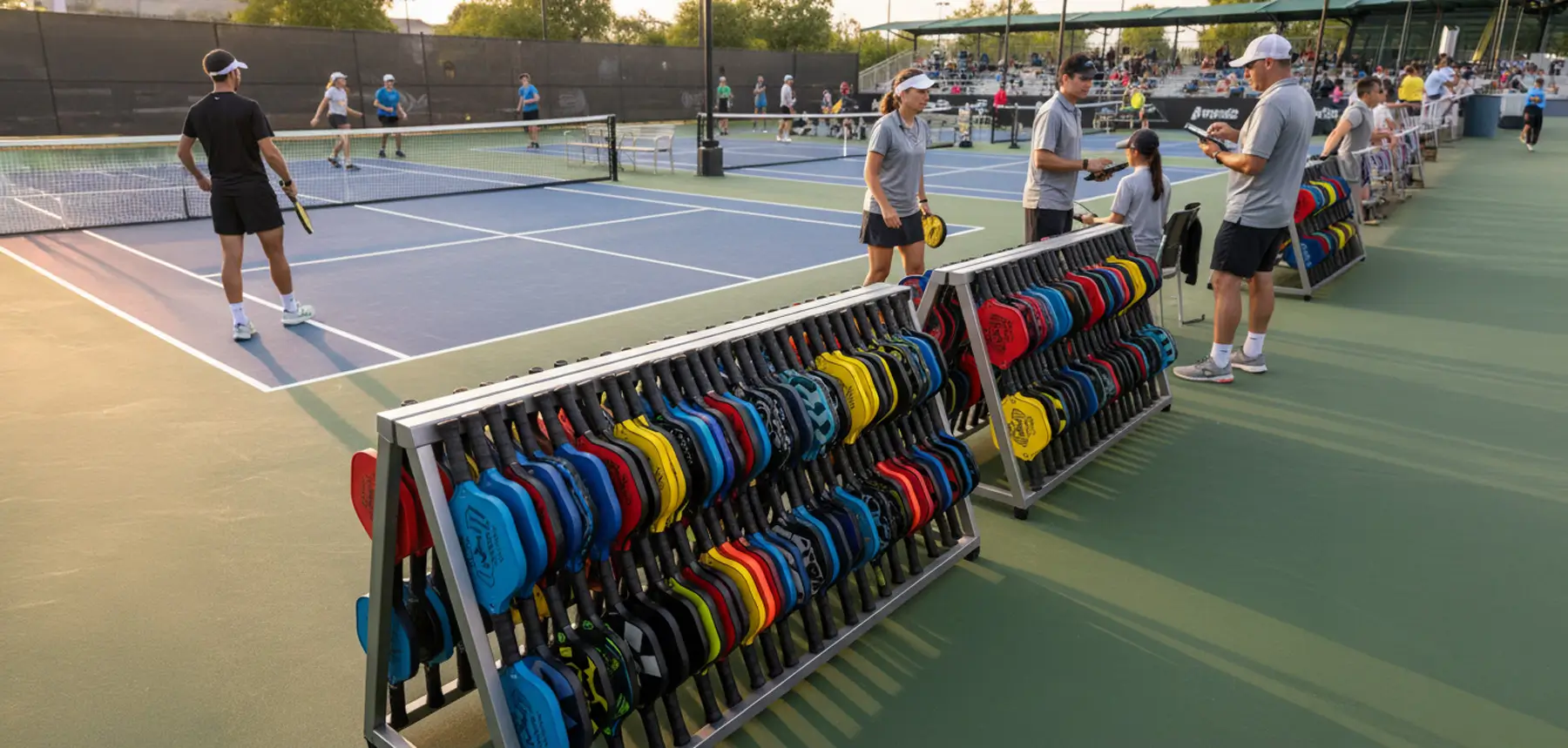
Boomer Pickleball makes your court management easier with all the accessories you need. From paddles and paddle racks to nets and next-up magnets, we’ve got it all. Check out our lineup or contact us for details.
How to Integrate Crowd Management Solutions from Day One for Pickleball Courts

5 Common Pickleball Injuries: How Court Managers Should Prepare Their Facility and Staff for Player Safety
How Can Quiet Pickleball Balls Enhance Indoor Play in Recreation Centers?

What Are the Benefits of Custom Paddle Racks for Pickleball Tournaments?