
Similar Posts
Pickleball tournaments are one of the best ways to attract new players and strengthen your pickleball community.
But if this is your first time hosting, you probably have plenty of questions. How many courts do you need? What’s the right format for matches? Who keeps track of scores, and, perhaps most importantly, how do you get players to show up?
At Boomer Pickleball, we’ve seen what it takes to make a tournament run smoothly. In this guide, we’re sharing practical tips on how to organize a pickleball tournament from start to finish, so you can focus on creating a fun, well-run event that brings players back again and again.
Start with a Clear Goal
First, ask yourself what kind of experience you want to create. Are you:
- Raising money for a cause?
- Hosting a fun weekend event for friends?
- Trying to attract competitive players?
The purpose behind your tournament will shape its structure, scale, and marketing.
Once you’ve established your goal, pick a date. Give yourself at least 6-8 weeks of lead time so you can plan without scrambling.
Choose a Format that Matches Your Crowd
One of the first things you need to decide is the tournament format. This will depend on how many players you expect and how competitive the event will be.
Here are the most common types of pickleball tournament formats:
1) Round Robin
Each player or team plays every other participant in their group. Round robin is ideal for small groups or pickleball community events where the focus is on fun and participation.
Everyone gets consistent court time, and it’s easy to manage without advanced scheduling tools. In the end, standings are based on wins, points scored, or point differential.
2) Single Elimination
In this format, once you lose, you’re out. It’s great for large turnouts and fast-moving events but not ideal if players are traveling far and want more than one match. However, it can work well if you’re short on time or running a one-day event.
3) Double Elimination
Here, players must lose twice to be eliminated. It’s fairer because one bad match doesn’t send a strong player home. However, this format does take longer to run, so make sure your schedule and space are up for it. The final is usually a rematch between the winners’ and losers’ bracket champions.
4) Pool Play + Bracket
Players are divided into pools for the first round (usually 3–5 players per group). Each group plays round robin, and the top finishers advance to a single- or double-elimination bracket.
Book the Right Venue
Your venue is at the heart of the tournament. You’ll need enough courts to keep the event moving, plus space for everything else, including check-ins, seating, water stations, shaded areas, and maybe even vendors or food trucks if you’re hosting a full-day event.
1) Indoor vs. Outdoor
If you’re in a place like Utah where spring and fall weather can be hit or miss, consider booking an indoor facility or having a backup plan. Nothing derails pickleball tournaments faster than bad weather and no plan B.
Indoor venues are also great for consistent lighting and predictable conditions, but outdoor spaces often give you more flexibility, especially for larger crowds. If you’re hosting pickleball tournaments Utah players will travel for, the setting and convenience matter.
2) How Many Courts Do You Need?
As a rule of thumb, one court can handle 8–12 players per hour, depending on match length and downtime between games. If you’re running a single-day event with 50–60 players, plan for at least 4–6 courts to avoid long wait times. Tournaments run smoother when players stay active and engaged, not sitting around waiting for their next match.
Set Up Registration Early
You can run sign-ups through a tournament software or a simple online form. Just make sure you collect all the details upfront:
- Player name, contact info, skill level
- Emergency contact
- Preferred division (singles, doubles, mixed)
Charge a small fee to cover costs or fundraise. Even community-led pickleball events benefit from a little financial commitment to reduce no-shows.
Early bird pricing or small giveaways (like custom wristbands or water bottles) can help encourage early sign-ups.
Plan for Divisions and Seeding
Once registration is in, divide players into brackets or pools. You can group them by:
- Age
- Gender
- Skill level (beginner, intermediate, advanced)
If you’re using a round-robin format, the divisions are often balanced naturally. For brackets, you’ll need to seed players based on known ability—or draw randomly if it’s a fun event.
Still learning how to run a pickleball tournament? Keep divisions flexible. Some players might overestimate or underestimate their level. A quick pre-tournament warm-up round can help you adjust as needed.
Assign Staff and Volunteers
Even small tournaments need a reliable team. Don’t try to do everything yourself: you’ll end up exhausted, and the event won’t go as smoothly.
Depending on your headcount, plan to have people in key roles like check-in, bracket management, court supervision, and basic first aid. You may also want dedicated scorekeepers or referees for competitive matches.
Set clear responsibilities ahead of time. A shared document or checklist works great for keeping everyone on the same page. Hold a short orientation before the event starts so everyone knows where to be, who to report to, and what to do if something comes up.
Stock Up on Equipment
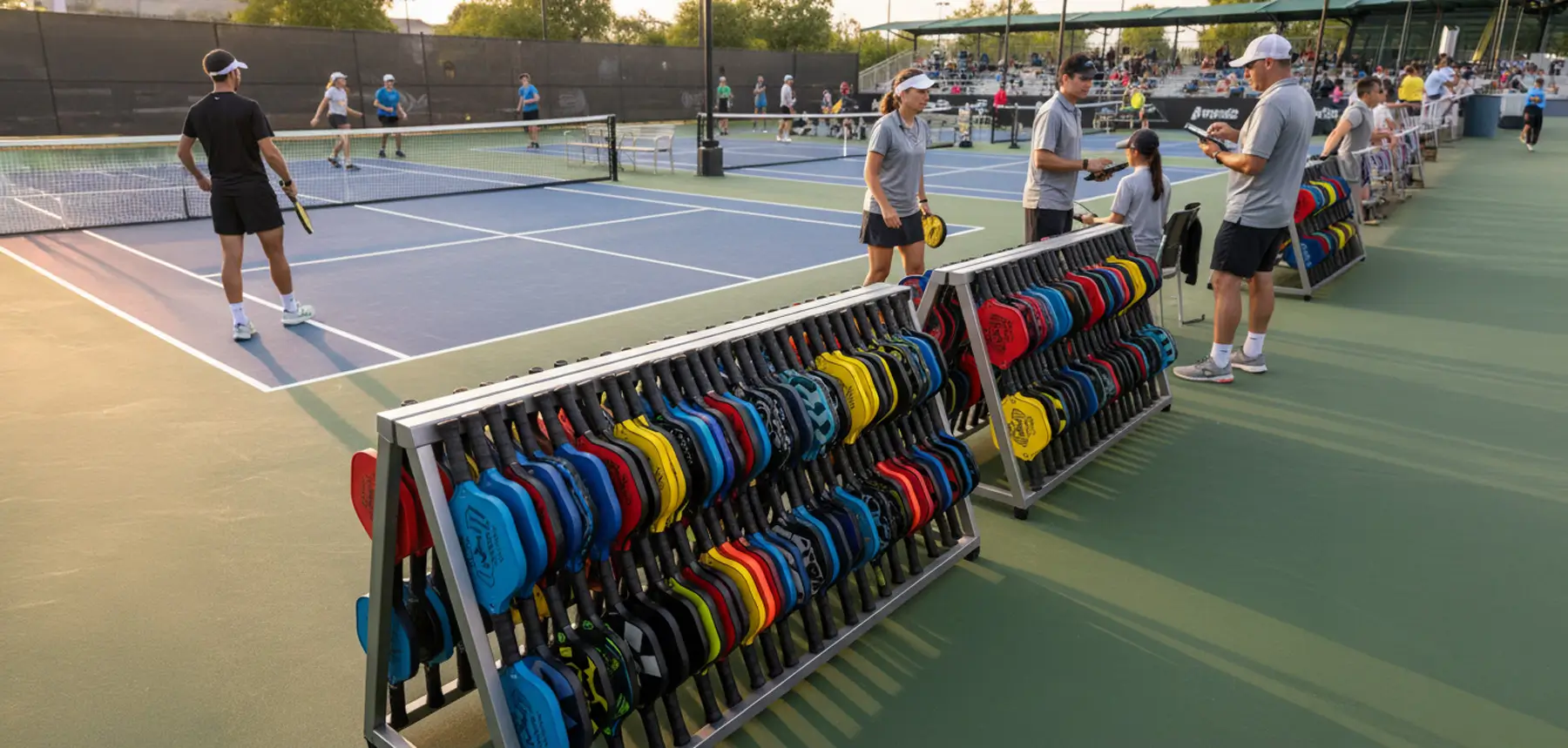
Make sure you have everything you need (and a little extra) on tournament day. Stock backup paddles in case someone forgets theirs or a newcomer needs one. Bring plenty of tournament-approved pickleballs, and double-check that each court is numbered.
You’ll also want to have all your match-tracking tools on hand, whether that’s paper score sheets or a digital bracket system on tablets. Try and build relationships with local stores or pickleball brands– they may want to provide demo gear, branded merch, or sponsorship in exchange for promotion at your event.
Promote the Event
Get the word out as early as possible. Post in local Facebook groups, share updates in community newsletters, and hang flyers in recreation centers, gyms, and coffee shops. If you have a player base already, send a personalized email invitation and ask past participants to spread the word.
National tournament directories like PickleballTournaments.com can help reach players looking for events in your area. Remember to highlight what makes your tournament special. If you have photos from past pickleball events, use them to promote the vibe and energy of your tournament.
For first-time hosts, focus your messaging around community, fair play, and the excitement of something new.
Prepare for Tournament Day
On the day of your pickleball tournament, start with a clear checklist to make sure nothing is left behind. You’ll need printed brackets (or digital access via phones or tablets), writing supplies, and a way to keep things charged. Welcome packets are a nice touch—they should include basic rules, match schedules, and contact info in case players have questions or need assistance.
Kick things off with a quick player meeting. Go over the format, scoring, etiquette, and how matches will be called. Make sure volunteers are in place at check-in and around the courts to keep things running.
Try to start matches on time, and if delays creep in, consider trimming warm-up times or adjusting match lengths slightly to keep things on track.
After the Event: Follow Up and Improve
Just because the nets are down doesn’t mean you’re done. Post photos from the tournament and thank your players online. Send a short follow-up email asking for feedback, what went well, what could be better, and what they’d love to see next time.
If you’re already thinking about the next tournament, now’s the time to plant the seed. Share the date, tease the theme, or open early interest sign-ups. Once players experience a smooth, well-run event, they’ll be eager to come back, and likely to bring friends.
Final Thoughts
Learning how to organize a pickleball tournament doesn’t require a professional planner. With a little prep, a good attitude, and the right tools, you can pull off an event that players will talk about long after the last match ends.
Ready to get started? Boomer Pickleball has everything you need to make it happen, from tournament-ready paddles and balls to court accessories and more. Whether you’re organizing a neighborhood round-robin or one of the next standout pickleball tournaments Utah has to offer, we’ve got your back.
Visit our website to browse our collection or contact our team with your queries today!
How to Integrate Crowd Management Solutions from Day One for Pickleball Courts

5 Common Pickleball Injuries: How Court Managers Should Prepare Their Facility and Staff for Player Safety
How Can Quiet Pickleball Balls Enhance Indoor Play in Recreation Centers?

What Are the Benefits of Custom Paddle Racks for Pickleball Tournaments?