Similar Posts
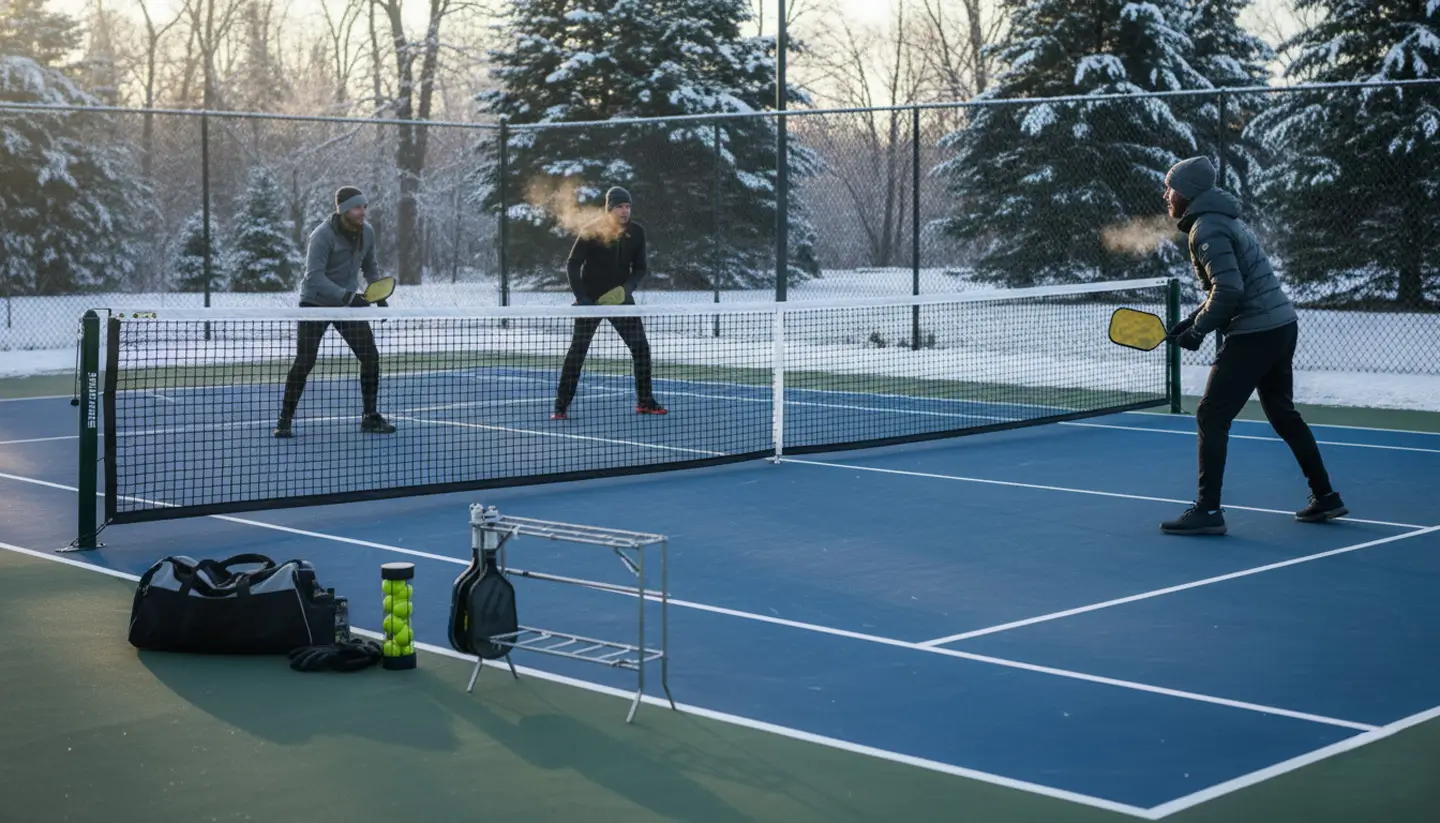
Cold weather doesn’t have to mean the end of pickleball season. Sure, your paddle hand might feel a little stiff and your breath might hang in the air, but with the right preparation, winter play can be just as fun as summer matches. In fact, many players even prefer it for the quieter courts and cooler temperatures for intense rallies.
The trick is knowing how to adapt. Playing pickleball in chilly weather requires a little extra care for your body and gear. From what to wear to how to keep your pickleballs from cracking in the cold, a few small adjustments can make all the difference.
Here are five tips to help you stay warm, comfortable, and ready to play all winter long.
Tip #1: Dress for Movement and Warmth
When the temperature drops, layering is your best friend. The goal is to stay warm without feeling weighed down, so you can move freely and react quickly on the court.
Start with a moisture-wicking base layer that keeps sweat off your skin. Add a lightweight insulating layer like fleece or thermal fabric, and finish with a wind- and water-resistant jacket that blocks the chill.
Here are a few additional clothing tips for outdoor pickleball in the winter months:
- Gloves with grip: Look for thin, flexible gloves that keep your hands warm while still allowing you to maintain paddle control.
- Thermal socks: Cold feet can end a match in a hurry. Choose breathable, insulated socks and consider bringing a dry pair for between games.
- Head and ear coverage: A beanie or headband helps retain body heat without blocking visibility.
- Avoid bulky outerwear: Big coats limit your swing and slow your reaction time. Stick with fitted, flexible layers instead.
If you plan to play a long session, pack an extra shirt or pair of gloves to swap out once they get damp. A quick change can make a big difference in comfort and focus.
Tip #2: Warm Up Longer Than Usual
According to the National Library of Medicine, when muscle temperature drops below 90°F, less energy is required to cause a strain or tear. And when the weather cools down, your body takes longer to warm up and move efficiently.
Before you hit the court, spend five to ten minutes getting your blood flowing. A short jog, a few jumping jacks, or some dynamic stretches can make a big difference in both performance and injury prevention. Focus on your shoulders, wrists, and legs since they handle most of the action during play.
Once you’re ready, start with gentle rallies instead of powerful serves or smashes. This gradual warm-up can protect you from cold-weather injury and give your paddle and pickleballs time to adjust to the cold. Plastic and composite materials become more brittle at low temperatures, so sudden force can cause cracks or breaks.
Keep moving between games to retain heat and stay limber. A quick walk or light stretch will help you stay comfortable and ready for the next round.
Tip #3: Protect Your Paddle from the Cold
Your pickleball paddle might be tougher than you think, but it’s still not built to handle freezing temperatures for long periods. When it gets too cold, the honeycomb core inside your paddle can stiffen and become brittle. One solid hit could cause tiny cracks that affect performance over time.
To keep your paddle in good shape during winter pickleball:
- Store it indoors at room temperature instead of leaving it in your car, garage, or shed.
- Let it warm up before playing if it’s been in a cold environment.
- Wipe it down after each session to remove moisture, especially around the edge guard.
- Use a paddle cover for added protection while traveling to and from the court.
Even if your paddle looks fine, cold exposure can weaken the materials in ways you can’t see. A few simple precautions will help it last longer and perform consistently throughout the winter season.
Tip #4: Choose the Right Pickleball Balls for Winter Play
If you’ve ever wondered, “Do pickleballs crack in the cold?” the short answer is yes. Most standard outdoor balls are made of hard plastic that becomes brittle as temperatures drop. A single powerful hit on a cold court can cause them to split or shatter.
To keep your game running smoothly, start each session with newer, high-quality pickleball balls and rotate them often. Older balls that have already seen plenty of play are more likely to split once the temperature drops.
A few simple habits can extend their lifespan:
- Warm them up first. Keep a few balls in your pocket or bag until you’re ready to play, so they aren’t starting out icy cold.
- Avoid overly hard or frozen courts. The impact is tougher on the plastic.
- Store them indoors between games to keep them at a stable temperature.
With the right pickleballs and a little preparation, you can enjoy consistent play without worrying about mid-match cracks or uneven bounces.
Tip #5: Store and Transport Gear Properly
Once your match is over, don’t let the cold undo all your good care. How you store your paddle, balls, and gear after playing matters just as much as how you treat them on the court.
Here are some tips to keep everything in top shape:
- Bring everything inside after playing instead of leaving it in your car or trunk.
- Let gear dry completely before packing it away, especially if snow or condensation got on it.
- Use a pickleball bag to protect your gear against bumps and temperature swings.
- Store gear at room temperature in a dry space, such as a closet or hallway.
Taking a few minutes to store and transport your gear properly means you’ll be ready to hit the court whenever winter weather allows.
Embrace the Advantages of Winter Pickleball
Winter might bring colder temps, but it also brings its own kind of pickleball magic. The courts are quieter, the air is crisp, and every game feels a little more focused. By taking the proper steps, you can enjoy outdoor pickleball all season long.
Need gear that’s ready for any season? Boomer Pickleball has some of the best paddles, balls, and accessories for year-round play. Browse our inventory or reach out to us to speak with a member of our team.
How to Integrate Crowd Management Solutions from Day One for Pickleball Courts

5 Common Pickleball Injuries: How Court Managers Should Prepare Their Facility and Staff for Player Safety
How Can Quiet Pickleball Balls Enhance Indoor Play in Recreation Centers?

What Are the Benefits of Custom Paddle Racks for Pickleball Tournaments?