
Similar Posts
If you own a pickleball court, you know how much wear and tear it can go through—constant foot traffic, paddle scrapes, changing weather conditions, and the occasional spilled sports drink.
Whether you manage a public facility, private court, or club, regular maintenance is the key to keeping your court in top shape for years to come.
Ignoring court upkeep can lead to cracks, fading lines, slippery surfaces, and costly repairs—problems that not only affect gameplay but can also be safety hazards.
But don’t worry, maintaining your court doesn’t have to be a headache. With a simple routine and the right approach, you can keep it looking and playing like new.
Let’s take a look!
1. Keep It Clean – A Little Effort Goes a Long Way
The easiest way to prolong the life of your court? Keep it clean. Dirt, leaves, and debris not only make the surface slippery but can also cause long-term damage.
For Outdoor Pickleball Courts
- Daily Sweep or Blow-Off – A quick pass with a leaf blower or soft-bristle broom keeps dirt and debris from settling in.
- Monthly Rinse – Use a hose or pressure washer (on a low setting) to wash away built-up dust and grime. Avoid harsh chemicals that can break down court coatings.
- Mold & Mildew Prevention – If your court is in a humid or shaded area, mold can form on the surface. A simple mix of water and white vinegar can help prevent this without damaging the surface.
For Indoor Pickleball Courts
- Dust & Mop Regularly – Indoor courts tend to collect dust, which can affect traction. A dry dust mop every day and a damp mop once a week will keep it clean.
- Use the Right Cleaner – Avoid all-purpose floor cleaners, which can leave behind residue that affects ball bounce. Instead, use a court-approved cleaner.
Pro Tip: Make sure players wear clean, non-marking shoes to minimize dirt buildup and scuff marks.
2. Stop Cracks Before They Get Worse
A small crack might not seem like a big deal, but if left alone, it will spread and become expensive to fix. If you spot cracks or uneven spots, tackle them right away before they cause bigger problems.
How to Prevent & Fix Cracks
- Regular Walk-Throughs – Check your court every month for cracks, surface peeling, or uneven spots.
- Fill Small Cracks Quickly – A court-specific crack filler can prevent minor cracks from expanding.
- Resurfacing Every 3–5 Years – If cracks are wider than 1/4 inch, it’s time to resurface the court. Resurfacing restores grip, smoothness, and color.
Avoid DIY Concrete Fillers – They might seem like an easy fix, but they don’t have the flexibility needed for a pickleball court. Always use materials designed for sports courts.
3. Why Paddle Racks Matter for Court Maintenance
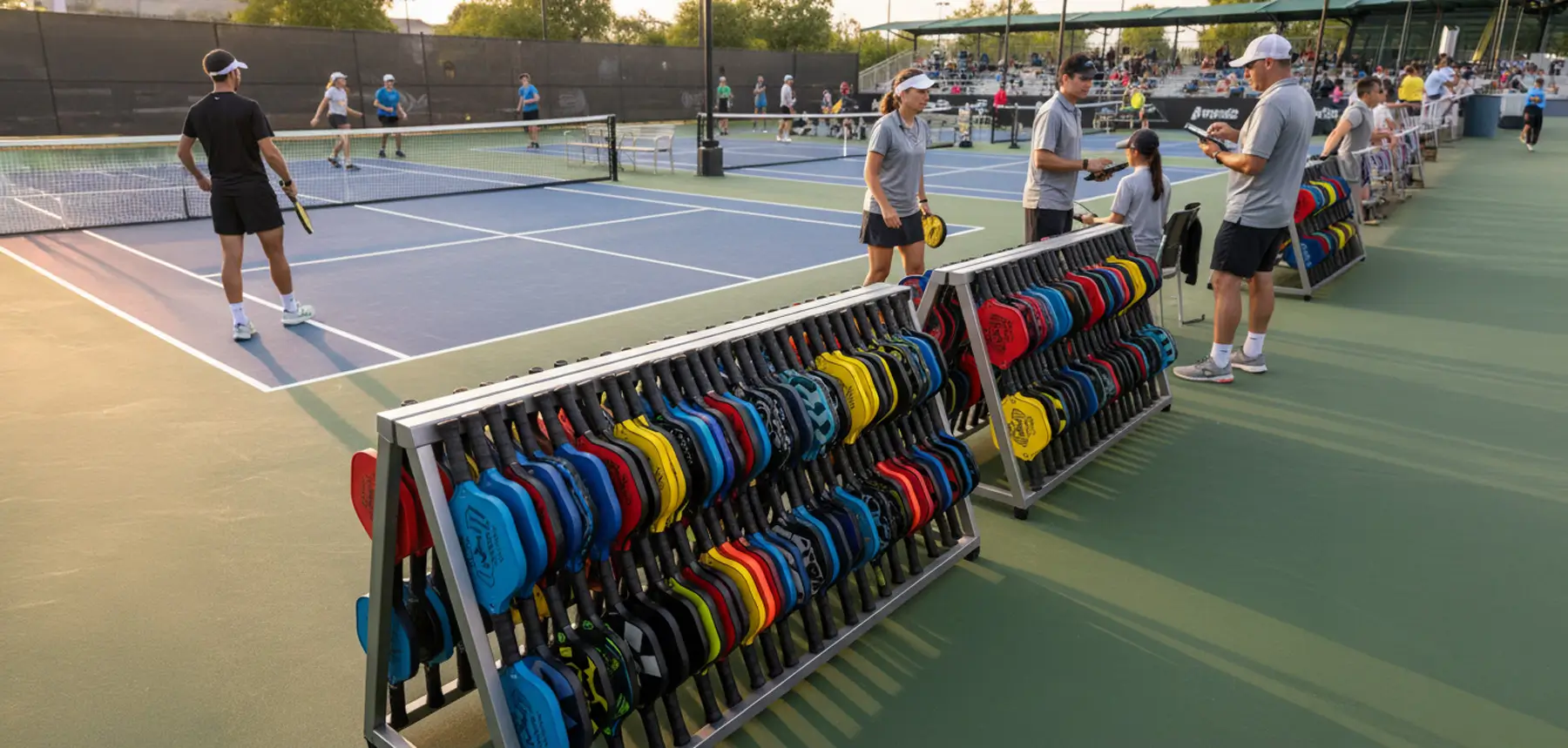
An often-overlooked part of court maintenance is keeping equipment organized, and that includes proper paddle storage. Leaving paddles scattered on the ground can lead to tripping hazards, unnecessary wear, and a cluttered court.
- Install a Paddle Rack Near the Court Entrance – This helps players keep their paddles organized and prevents them from being left on the court surface, where they could cause damage or create a safety risk.
- Encourage Players to Use the Rack – Court owners can add signage reminding players to store their paddles properly when not in use.
- Choose a Durable, Weather-Resistant Rack – If your court is outdoors, opt for a sturdy, rust-proof paddle rack that can withstand the elements.
Pro Tip: Investing in paddle racks not only keeps your court clean but also helps extend the life of paddles by keeping them off the ground and protected from dirt and moisture.
4. Don’t Forget the Nets & Posts
A well-maintained pickleball court isn’t just about the surface—your net and posts matter too.
How to Keep Nets & Posts in Top Shape
- Check for Rust & Stability – Give posts a quick shake test every few weeks to make sure they’re sturdy. If you see rust, apply a rust-resistant spray to extend their lifespan.
- Adjust Net Tension Properly – Over-tightened nets wear out faster and put unnecessary strain on the posts. Keep the tension firm but not too tight.
- Store Nets During Harsh Weather – If you’re in an area with heavy snow or extreme heat, consider removing and storing the net during off-seasons.
Pro Tip: Investing in a high-quality, weather-resistant net saves you money in the long run. Cheap nets stretch out quickly and need frequent replacing.
5. Manage Surrounding Areas to Reduce Court Mess
The environment around your court plays a bigger role in maintenance than you might think. Overgrown trees, grass, and weeds can create extra work and potential hazards.
What You Can Do:
- Trim Overhanging Trees – Falling leaves, sap, and branches create stains, debris, and slippery spots. Keeping trees trimmed makes a huge difference.
- Keep Weeds & Grass at a Distance – A 2–3 foot buffer around the court helps prevent roots from creeping under the surface and causing cracks.
- Use Windscreens for Outdoor Courts – These block dust, dirt, and wind while also improving visibility and gameplay conditions.
6. Watch Out for Water Damage
Water is one of the biggest threats to a pickleball court. Puddles, poor drainage, and standing water can weaken the surface over time.
How to Prevent Water Damage:
- Ensure Proper Court Slope – Courts should have a slight 1% slope to direct water away naturally.
- Keep Drainage Systems Clear – If your court has gutters or drainage channels, make sure they are clean and unclogged.
- Remove Standing Water ASAP – If you notice puddles after a rainstorm, use a squeegee to remove excess water.
Avoid Using Salt for Snow Removal – It might seem like a good idea in winter, but salt eats away at the surface and causes long-term damage.
7. Seasonal Maintenance: Stay Ahead of the Weather
Each season comes with its own maintenance challenges. A little seasonal preparation can save you big headaches down the line.
Spring & Summer
- Increase cleaning frequency due to pollen and dust buildup.
- Inspect for any winter damage and address cracks immediately.
- Apply a UV-protective sealant to protect outdoor courts from sun damage.
Fall
- Clear fallen leaves daily to prevent stains and slip hazards.
- Check drainage systems to ensure they’re working before heavy winter rains.
- Inspect court surface for early signs of wear before the colder months.
Winter (for Outdoor Courts in Cold Climates)
- Remove standing snow with soft shovels or brooms (avoid metal tools!).
- Avoid salt or harsh de-icers, which can degrade the court material.
- If possible, cover the court to protect it from freeze-thaw damage.
8. Educate Players to Reduce Unnecessary Damage
A lot of court damage comes from improper use. If players understand the importance of court care, you’ll deal with fewer maintenance headaches.
Tips to Keep Your Court in Shape
✔ Require non-marking shoes to avoid scuff marks.
✔ No dragging paddles, chairs, or equipment across the surface.
✔ Encourage players to report small cracks before they get worse.
✔ Use a court rules sign to remind players of best practices.
Final Thoughts: A Little Maintenance Goes a Long Way
Taking care of your pickleball court doesn’t have to be complicated. With regular cleaning, inspections, and seasonal upkeep, you can keep your court safe, playable, and long-lasting.
With the right maintenance, your court will stay in excellent condition for years to come, providing a great playing experience for everyone.
Looking for High-Quality Pickleball Court Equipment?
Check out Boomer Pickleball for durable nets, paddle racks, and accessories designed to keep your court well-maintained and game-ready!
How to Integrate Crowd Management Solutions from Day One for Pickleball Courts

5 Common Pickleball Injuries: How Court Managers Should Prepare Their Facility and Staff for Player Safety
How Can Quiet Pickleball Balls Enhance Indoor Play in Recreation Centers?

What Are the Benefits of Custom Paddle Racks for Pickleball Tournaments?